Tequila Industry: Trends and Opportunities Through 2026
- The tequila industry is entering a phase of global maturity, driven by more informed consumers who value agave origin and responsible production practices.
- Tequila is solidifying its status as a premium spirit while continuing to evolve within an increasingly sophisticated category.
- The sector remains on a strong international growth trajectory, attracting rising interest across new markets.
Tequila is much more than a drink. It’s history, landscape, and tradition. But in recent years, something has shifted in the way the world discovers it.
Today’s consumer is no longer satisfied with simply knowing a brand. They want to understand the product’s journey from field to glass. Concepts like the NOM, production methods, and the use of additives have become part of the conversation among both enthusiasts and experts. This growing interest in origin has brought a key question to the forefront: where the agave comes from and how the spirit is made.
More than most other spirits, tequila begins its story in the field. Its raw material—the blue Weber agave (Agave tequilana Weber)—takes between six and eight years to reach maturity, an agricultural cycle that directly shapes the quality of the final product. Today, more agaves are allowed to fully mature in the field, resulting in more complex aromatic profiles and spirits with greater depth and character. That is why cultivation control and agave traceability have become essential to ensuring quality and consistency.
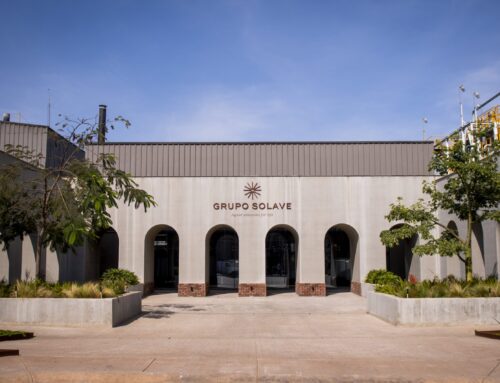
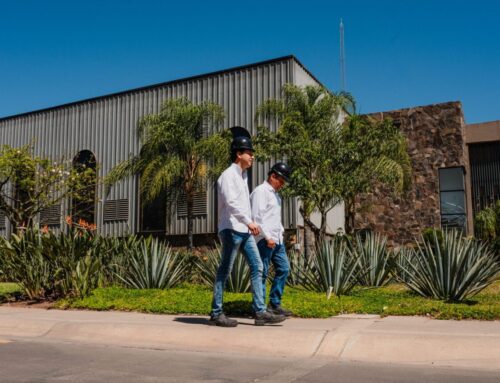
At Grupo Solave, this approach takes shape through a clear strategy: working from the root. Through Magnocampo, our specialized cultivation unit, Grupo Solave promotes sustainable agricultural practices and manages more than 6,500 hectares of blue agave fields, ensuring end-to-end control from the field to the final product.
THE EVOLUTION OF TEQUILA INTO A PRESTIGE SPIRIT
For a long time, tequila was associated with celebrations and quick consumption. Today, the story is different.
In high-end bars and restaurants, this Mexican spirit is increasingly presented as a refined, sophisticated drink. This shift is part of a broader evolution that has positioned tequila as a premium product, comparable to traditional categories such as whisky and cognac. This transformation has been driven by several factors:
- The rise of contemporary mixology, which has embraced tequila as a base for increasingly refined creations.
- The global expansion of Mexican cuisine, which has helped position tequila as one of the country’s leading cultural ambassadors.
- The development of new expressions—such as reposado and añejo tequilas—that broaden tasting possibilities and reinforce its reputation as a high-quality spirit.
- A growing consumer preference for higher-quality beverages, driving demand for more curated experiences and higher-value products.
At the same time, tequila’s prestige is becoming more closely tied to its agricultural origin, reinforcing the importance of responsible agave cultivation practices.
At Grupo Solave, this vision takes shape through concrete actions under its Sustainability Program. The company promotes circular economy initiatives that give new life to agave bagasse, transforming it into biopallets and biofuel briquettes used in its production processes. It also adopts clean technologies, such as solar energy, generating more than 500,000 kWh of renewable energy annually.
These initiatives help optimize resources, reduce waste, and move toward a more efficient and environmentally responsible tequila production model—practices that are increasingly becoming key differentiators in a category that continues to move upmarket.
A GLOBALLY EXPANDING INDUSTRY
Tequila’s global growth is undeniable. According to the Tequila Regulatory Council (TRC), Mexico produced well over 583 million liters in 2025, representing a 17.7% increase compared to 2024.
That same year, exports reached 406 million liters, of which 333 million were shipped to the United States, which remains the leading international market.
The strength of the U.S. market has been central to tequila’s global consolidation and has served as a platform for expanding the category’s presence in other regions.
Today, interest in Mexican spirits is also growing strongly elsewhere. Europe already consumes between 35 and 38 million liters annually, while Latin American and Asian markets are showing sustained growth. In 2025, for example, Japan imported 4 million liters, and China recorded imports of 2.8 million liters. According to the CRT, this momentum is expected to accelerate in 2026, with further expansion into China, Brazil, and India—three markets with significant mass-consumption potential.
Market conditions in recent years have also been reflected in the growing number of brands. There are currently around 2,500 tequila brands registered with the CRT. In such a competitive landscape, companies that can differentiate themselves through origin, heritage, and production quality will be best positioned to navigate the industry’s next phase of consolidation and capitalize on global growth.
AGAVE, THE HEART OF THE INDUSTRY
More curious and conscious consumers, open international markets, and an increasingly sophisticated category are shaping the sector’s next phase.
Today, the true value of tequila returns to where it has always been: the agave, the time it takes to mature, and the deep connection between land, cultivation, and tradition.
Because while tequila continues to win over new markets, its essence remains unchanged: every bottle is the result of years of patience in the field, where blue agave ripens under the Mexican sun.
FONTS
https://www.informador.mx/mexico/Cuantas-marcas-de-tequila-hay-en-Mexico-20230925-0048.html
Follow Us on Social Media:
IG: www.instagram.com/gruposolave/