The Blue Soul of Mexico: A Brief History of Agave’s Impact on the World
- There are currently more than 200 species of agave, and Mexico is home to more than half of them.
- Although there is great diversity among agaves, only the Tequilana Weber blue variety is used for tequila production and its derivatives.
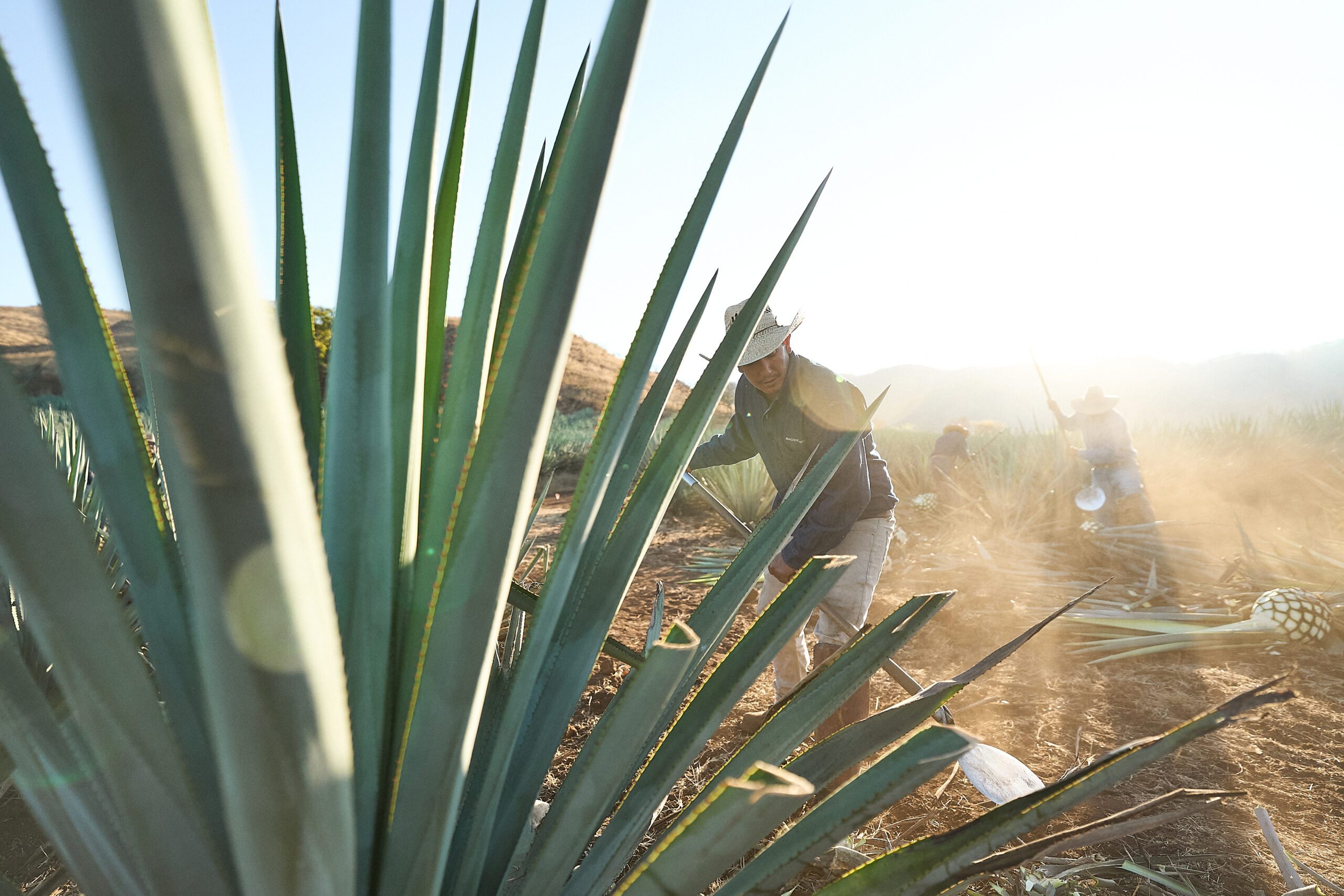
- Grupo Solave actively supports the conservation of 6,500 hectares of agave fields to ensure sustainability through Magnocampo, its business unit dedicated to the cultivation and care of Blue Agave.
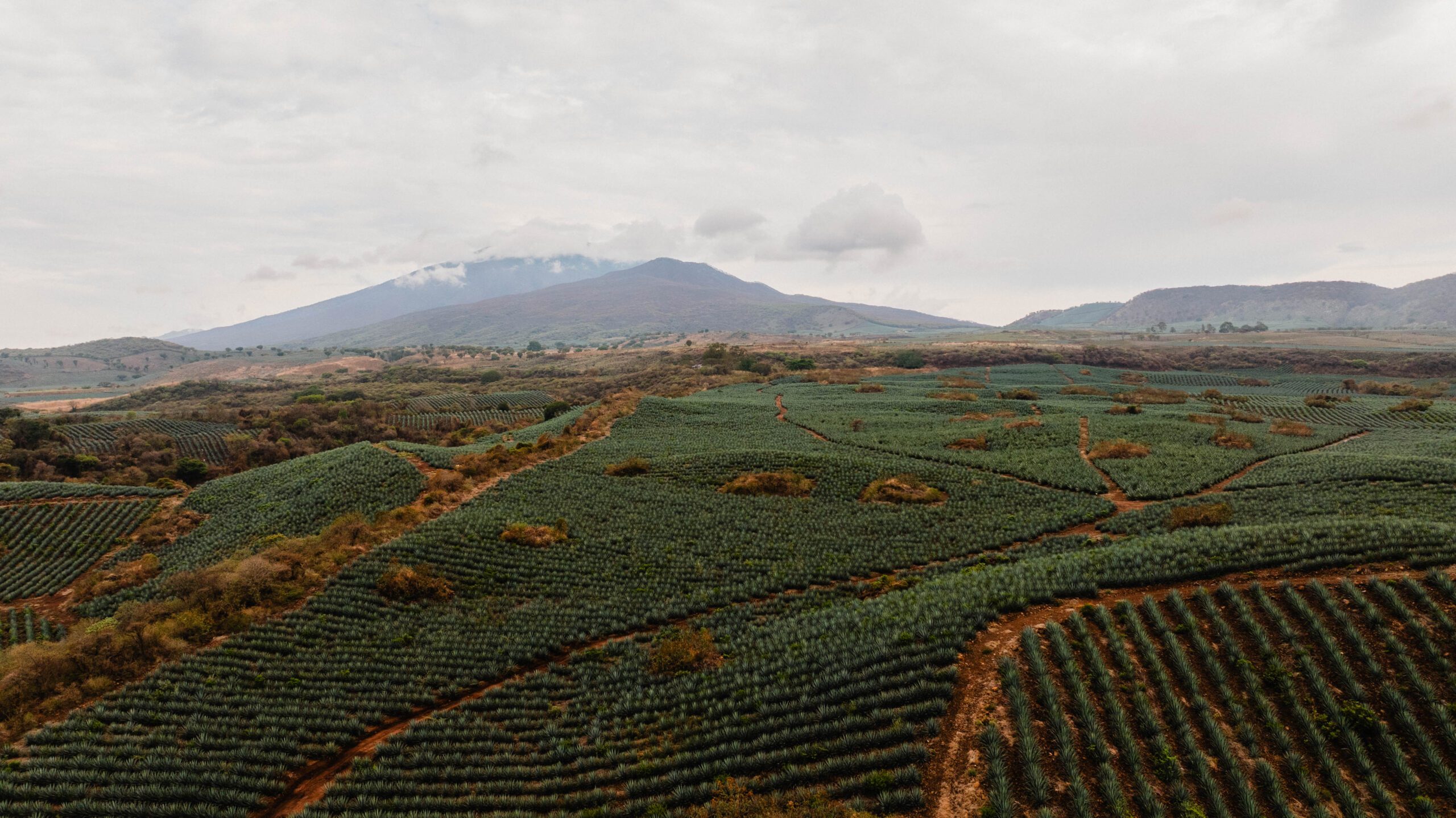
Agave is more than a plant: it is a symbol. Its silhouette cutting across the horizon, its metallic blue stretching like a sea over the red soil of Jalisco, reminds us who we are and where we come from. At Grupo Solave, we find inspiration in each of its leaves, its millennia-old history, and its silent resilience. For us, understanding its past is the first step toward securing its future.
The Origin of a Legend
Some legends, they say, have the power to transcend time and touch reality. According to tradition, agave was born from the sacrifice of the goddess Mayahuel. In an act of love and freedom, Mayahuel fled with Quetzalcóatl, unleashing the wrath of the celestial demons, the Tzitzimime. In her fall, her body transformed into the agave plant, as if nature itself had decided to immortalize her essence.
Beyond myth, traces of agave are deeply rooted in pre-Hispanic Mesoamerican history. Remains of the agave hearts have been found in ancient tombs, evidence of its ritual and nutritional uses. Codices such as the Tonalamatl also record its importance within ancestral beliefs and practices.
Before the arrival of the conquistadors, indigenous peoples already fermented its sap to produce pulque, a sacred beverage. Centuries later, with the introduction of distillation methods during the colonial period, agave gained a new identity: tequila.
The name “agave” comes from the Swedish naturalist Carl Linnaeus, who adopted it from the Greek “agavos”, meaning “illustrious, noble, admirable.” He could not have chosen better.
An Evolution that Honors the Land
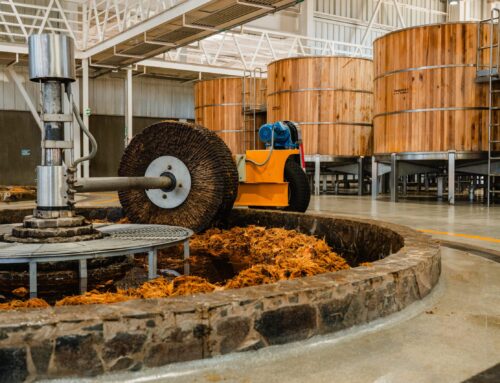
Agave has witnessed the defining moments that shaped Mexico. During the 18th century, tequila haciendas began to flourish in the Tequila Valley, thanks to a unique environment: nutrient-rich soil, balanced climate, and a tradition fueled by community labor. The tahonas —volcanic stones used to crush cooked piñas— shaped the first extractions, followed by copper stills for distillation. In this way, tequila became the liquid ambassador of a culture.
In 1902, French botanist Frédéric Albert Constantin Weber officially described the tequila agave, giving it the name that endures today: Agave Tequilana Weber blue variety. This was the scientific recognition of a plant that was already an essential part of the Mexican soul.
The Leap to Global Protection
Over time, tequila began to win over palates beyond our borders. But expansion brought the risk of losing the essence and authenticity of its origin. In 1974, the Denomination of Origin Tequila (DOT) was established, marking a turning point. This measure not only protected the name “tequila” internationally, but also safeguarded the environment that makes it possible: the agave fields.
Years later, in 1994, the Tequila Regulatory Council (CRT) was created, a key organization to preserve product integrity and maintain balance among those who cultivate, produce, bottle, and market tequila. One of its most important achievements was geographically defining the areas where Agave tequilana Weber blue can be cultivated, covering specific regions of Jalisco, Nayarit, Guanajuato, Michoacán, and Tamaulipas.
At Grupo Solave, this legacy inspires us to contribute with respect and commitment. We cultivate over 6,000 hectares of agave under sustainable practices, implementing processes that ensure traceability and harmony with the environment. We do this not out of obligation, but conviction: we believe the future of agave is built by caring for its roots.
A Growing Legacy
Agave does not stop. As if responding to the tireless spirit of Mayahuel, it continues to evolve, finding new ways to be part of daily life.
In recent years, agave syrup has gained popularity as a natural sweetener with a low glycemic index, valued for both the prebiotic properties of some varieties and its flavor. From our experience with this noble plant, Grupo Solave has sought ways to bring its benefits to the world while remaining true to its origin.
But that is only part of the story. Current research has revealed its potential in the cosmetics industry, in products such as soaps, creams, and natural makeup. Its applications are also being explored in organic fertilizers, biodegradable fibers, and even biofuels. Far from being a relic of the past, agave is at the center of a more sustainable future.
The Landscape that Unites Us
Perhaps the greatest recognition for this extraordinary plant is its environment: the Agave Landscape, declared a UNESCO World Heritage Site in 2006. This territory, known as the Valles Region, encompasses the municipalities of Tequila, Amatitán, El Arenal, Magdalena, and Teuchitlán, where agave fields stretch like a blue carpet crowned by the majestic Tequila Volcano.
Behind this visual spectacle is the ongoing work of producers, families, and communities striving to preserve the essence of agave. In our case, we adopt clean technologies such as solar energy, generating more than 500,000 kWh of renewable energy per year. Combined with efficient waste management, these practices help prevent deforestation and soil erosion, preserving the landscape for future generations.
A Heritage that Continues to Grow
Beyond its economic importance, agave lives in Mexico’s collective imagination. It represents effort, ingenuity, and connection to the land. It is a plant that has witnessed centuries of transformation and yet remains steadfast, guiding new paths.
At Grupo Solave, we are deeply honored to be part of this story. Every agave we cultivate, every process we improve, every innovation we explore, is done with the certainty that we are custodians of a living legend.
Because agave is a symbol that invites us to look at our roots with pride and the horizon with hope.
TO LEARN MORE
Discover more about how we ensure traceability in our Blue Agave fields: https://gruposolave.com/es/traceability-at-grupo-solave/
Visit Magnocampo, our business unit dedicated to the planting and cultivation of Blue Agave: https://magnocampo.com/
Follow Us on Social Media:
IG: www.instagram.com/gruposolave/
FB: www.facebook.com/gruposolave
IN: www.linkedin.com/company/gruposolave/